
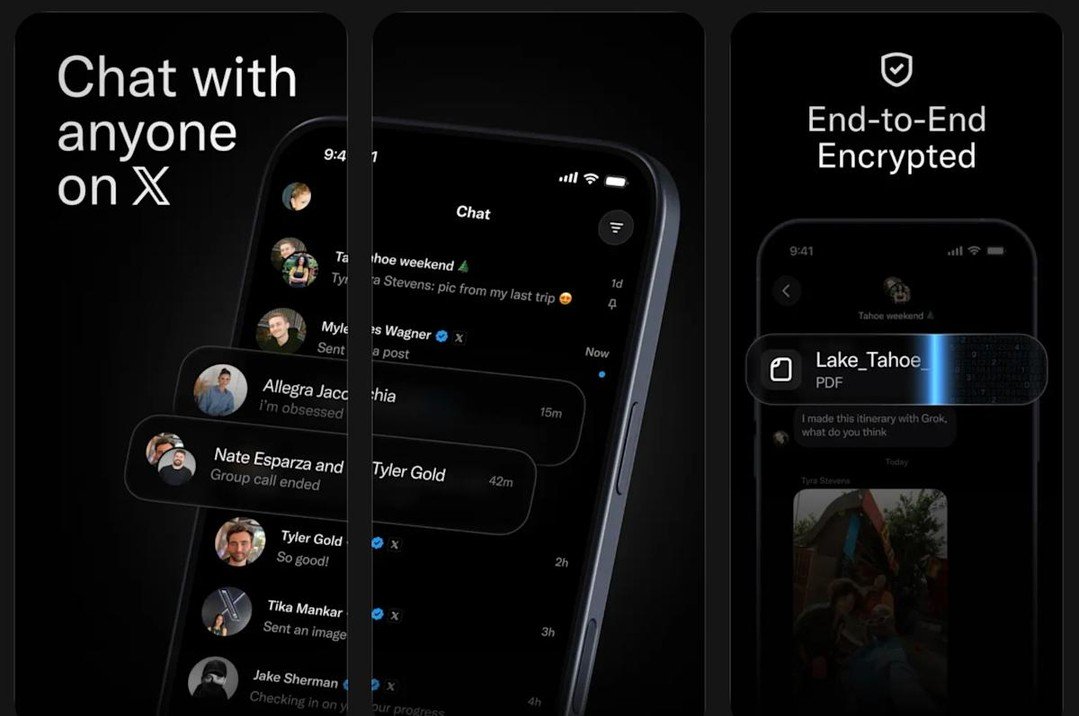
X has just launched its new XChat app, and many people are already talking about it. The app is meant to make messaging easier for users on X, with features like chatting, group messages, calls, and file sharing. On the surface, it looks like a big upgrade, especially for people who already use X every day.
But behind all the excitement, there is a serious concern that many users are not paying attention to. This concern is about privacy, data safety, and how much control users really have over their messages. If you are thinking of using XChat, you need to understand what is really going on before trusting it with your private conversations.
What is XChat and why is everyone talking about it?
XChat is a new messaging app created by X, the platform formerly known as Twitter. It was launched as a separate app and is currently available on iPhone. The goal of XChat is to allow users to chat directly, send media, make audio and video calls, and join group chats without leaving the app.
It is also designed to replace X Communities, a feature where people joined interest-based groups. Those Communities are being shut down because of low usage and spam problems, so users are being moved into XChat instead.
X says the app is simple and private. It also says messages are encrypted and that there are no ads or tracking inside the app. On paper, this sounds very good and very safe. But things are not as simple as they look.
The big promise, private and secure messaging
One of the biggest selling points of XChat is privacy. The company says messages are end-to-end encrypted. This means only the sender and receiver should be able to read messages.
The app also includes features like disappearing messages, message editing, message deletion, and even screenshot blocking. These features are meant to give users more control over their chats. Many people see this as X trying to compete with apps like WhatsApp and Signal.
However, privacy experts have raised questions about how strong this protection really is. This is where the real concern begins.
The big problem nobody is talking about
The main issue with XChat is not what it shows users, but what it does behind the scenes. Experts say that even though messages may be encrypted, the system still depends heavily on X’s own servers and internal control.
One major concern is that encryption keys may be stored on X’s servers. This means that in some cases, the company itself could technically access user messages if it wanted to or if the system is compromised. This is very different from apps like Signal, where encryption keys are stored only on the user’s device.
Another issue is metadata. Even if your message content is safe, metadata is still collected. Metadata includes things like who you are talking to, when you are talking, how long you are chatting, and from which device or location. This type of data may not show your message, but it can still reveal a lot about your behavior.
For example, someone may not see your chat content, but they can still know that you are talking to a specific person every night or that you are active in certain groups. This is why many experts say metadata can be just as sensitive as the message itself.
XChat and data collection concerns
Another concern is that XChat still collects user data. This includes usage activity, device information, and interaction patterns. Even if X says there is no advertising or tracking, data is still being gathered to improve the system and power other tools inside the X ecosystem.
This becomes more important because X is also heavily investing in artificial intelligence. Some experts believe that user data from apps like XChat could eventually be used to train AI systems. This is not confirmed for XChat specifically, but the possibility raises concern among privacy advocates.
There is also the issue of shared infrastructure. XChat is not a completely separate system. It still sits inside the larger X ecosystem, which includes other services like content feeds and AI tools. This makes some users worry about how separated their private messages really are.
Why experts are comparing XChat to WhatsApp and Signal
When people talk about secure messaging apps, WhatsApp and Signal always come up. WhatsApp does use end-to-end encryption, but it still collects metadata and is part of Meta’s wider data system.
Signal is different. Signal is widely seen as the most private messaging app because it does not store message content or keys on central servers. It is designed so that even the company cannot read your messages.
Experts say XChat is somewhere in between. It offers encryption and privacy features, but it does not reach the same level of full protection as Signal. This is why many cybersecurity experts are advising caution.
Should you actually use XChat?
For normal chatting, like talking with friends or sharing casual updates, XChat may be okay. It is easy to use and comes with modern features that make messaging smooth. If your conversations are not very sensitive, you may not notice any problem.
But for private, sensitive, or business conversations, experts are warning users to be careful. Things like financial discussions, health information, legal matters, or anything personal should not be shared without thinking twice.
The reason is simple. Once metadata and server access are involved, full privacy is no longer guaranteed. Even if messages are encrypted, other parts of your activity can still be tracked or analyzed.
The bigger picture behind XChat
XChat is not just another messaging app. It is part of a bigger strategy by X to build a full ecosystem of apps and services. The company is trying to bring messaging, social media, payments, and AI into one connected system.
This is why XChat is important to them. It is not only about chatting. It is about keeping users inside the X ecosystem for more of their daily digital life.
At the same time, this direction raises questions about how much control users will have over their personal data in the future.
Also Read:
The Truth About Meta’s 8,000 Job Cuts That No One Is Talking About
The Bottom Line
XChat is new, fast, and full of interesting features. It looks like a strong competitor in the messaging space, especially with its group chats, calls, and privacy tools. Many users will likely enjoy using it for everyday communication.
However, the biggest problem is trust. Privacy experts are not fully convinced that XChat offers the same level of protection as other secure apps. Issues around metadata, server control, and data collection make it a risky choice for sensitive conversations.
So while XChat is a big new step for X, users should be careful about how they use it. It may be fine for casual chats, but when it comes to serious private communication, it is better to think twice before trusting it completely.
