
Artificial intelligence is changing many industries, but one area that is getting more attention is healthcare. While AI cannot replace doctors, it is becoming a useful tool that helps patients understand their conditions, ask better questions, and make informed decisions.
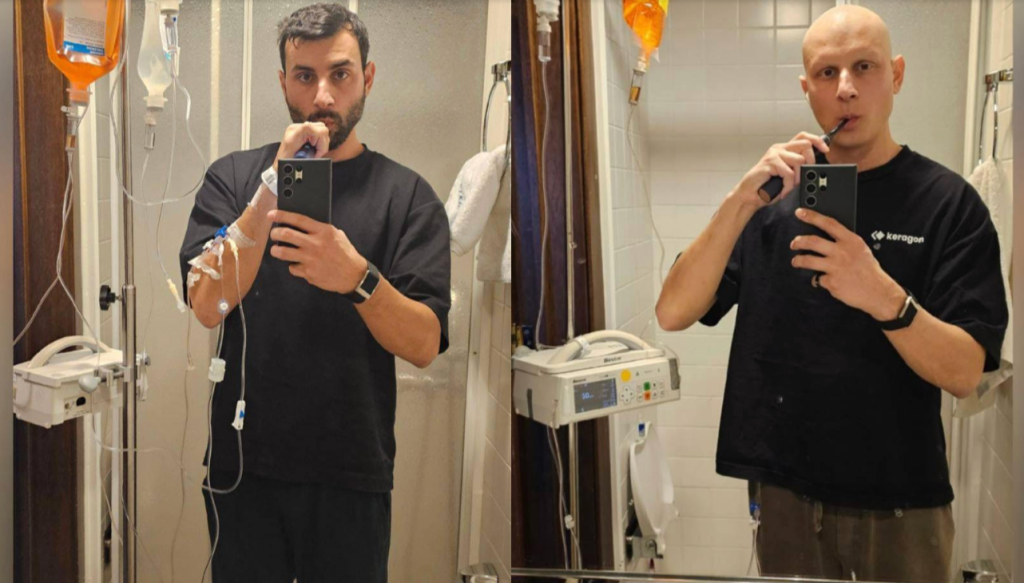
One recent story that has caught the attention of many people is that of startup founder Conno Christou. At just 35 years old, he was one of the healthiest people around him. He exercised regularly, tracked his sleep, monitored his health with wearable devices, and carried out detailed blood tests every year. Yet, he was suddenly diagnosed with a rare and aggressive form of cancer.
What happened next shows how AI can support medical care when used the right way.
A Healthy Lifestyle Could Not Prevent Cancer
Christou was not someone who ignored his health. Every year, he carried out extensive blood tests and checked nearly 100 different health markers. He also used devices like the Whoop band and the Oura Ring to monitor his sleep and recovery.
His most recent medical checkup showed that everything looked normal. His results were excellent, and there was no sign that anything was wrong.
Then, after one workout session, his arm became swollen.
At first, he did not think it was serious. After about a week, he visited a doctor who discovered two blood clots in his veins. Surgery was planned to remove the clots, but additional scans before the operation revealed something far more serious.
Doctors found a large tumor measuring about 11 centimeters behind his breastbone.
A biopsy later confirmed that he had a fast growing and aggressive type of non Hodgkin’s lymphoma. According to doctors, the disease had developed only a few months earlier. If it had remained undetected for just a few more weeks, it could have reached a much more dangerous stage.
Two Doctors Gave Completely Different Advice
After receiving the diagnosis, Christou met with a respected cancer specialist.
The doctor recommended a less aggressive chemotherapy treatment. His first treatment session was already scheduled.
However, before it began, Christou decided to seek another opinion.
The second cancer specialist strongly disagreed with the first recommendation. Instead, this doctor advised a much stronger chemotherapy plan that required him to stay in the hospital during each treatment cycle.
The reason was simple. Based on Christou’s specific type of cancer, the stronger treatment offered a much higher chance of success.
Imagine hearing two experienced specialists recommend completely different treatments for the same illness. It would leave almost anyone confused.
Instead of choosing immediately, Christou decided to gather more information.
He Collected Twelve Medical Opinions
Rather than relying on only one or two doctors, Christou contacted cancer specialists from different hospitals and countries.
In total, he received 12 expert opinions.
Eleven of those specialists agreed that the stronger chemotherapy was the better choice.
With that level of agreement, he felt confident enough to move forward with the more aggressive treatment.
His decision was not based on emotion. It was based on evidence from multiple experts.
This is an important lesson for anyone facing a serious illness. Seeking another medical opinion can sometimes change the entire direction of treatment.
Using AI During Cancer Treatment
During six months of chemotherapy, Christou carefully recorded almost everything happening to his body.
He kept notes about his symptoms, medications, blood test results, sleep patterns, and recovery after each treatment. His wearable devices also collected health information every day.
Instead of leaving all that information scattered across different apps and notebooks, he uploaded it into Claude, an AI assistant developed by Anthropic. He made it clear that AI did not replace his doctors.
Instead, it helped him understand medical information that would have been difficult to process on his own. It also helped him prepare better questions before every hospital visit.
This is one of the biggest strengths of AI in healthcare today. It can organize large amounts of information and explain complex medical topics in simple language.
The Biggest Surprise Came After Chemotherapy
After completing all six chemotherapy cycles, Christou underwent another PET scan to determine whether the cancer was gone.
The results were not clear. His doctor became concerned that cancer cells might still be active. Discussions began about another round of treatment, including radiation therapy close to his heart and lungs.
Radiation therapy can be lifesaving when needed, but it also carries risks, especially when important organs are nearby. Before accepting another treatment, Christou decided to study the situation more carefully.
AI Helped Him Ask the Right Questions
Christou uploaded his medical scans into Claude, along with information about his diagnosis and treatment. The AI pointed to something that could explain the scan results.
In younger patients recovering from this particular type of lymphoma, the thymus gland can become active again after chemotherapy. This normal process can sometimes appear on a PET scan in a way that looks similar to cancer.
The AI suggested that this could be the reason for the unclear scan instead of active cancer. This was not presented as a final diagnosis. It was simply another possibility that deserved attention.
Armed with this information, Christou sought more medical opinions.
Doctors Confirmed the AI’s Suggestion
Christou consulted three additional cancer specialists. One of those doctors confirmed that the AI had pointed toward the correct explanation. The unusual activity seen on the scan was not cancer returning. It was something called thymus rebound, which is a normal recovery process in some younger patients after chemotherapy.
Because of this finding, Christou did not need radiation therapy. His cancer treatment was officially complete.
This moment highlights an important truth about artificial intelligence in medicine. The AI did not diagnose him on its own. Instead, it helped him notice an important possibility that doctors later confirmed through their own medical judgment.
What This Means for the Future of Healthcare
Stories like this are becoming more common as AI tools improve.
Patients are using AI to better understand test results, organize medical records, summarize research papers, and prepare questions before appointments. Doctors are also beginning to explore how AI can reduce paperwork, analyze medical images, and support faster decision making.
However, experts continue to warn that AI should never replace trained healthcare professionals. AI systems can sometimes make mistakes, misunderstand information, or provide answers that do not fit a person’s unique medical situation.
The safest approach is to use AI as a support tool, not as the final decision maker.
Also Read: Why Elon Musk Lost His Trillionaire Status Less Than Two Weeks After Making History
A Lesson Beyond Technology
Perhaps the biggest lesson from Christou’s experience has little to do with artificial intelligence.
It is about being actively involved in your own healthcare.
He did not ignore his symptoms. He asked questions. He sought several expert opinions. He studied reliable information. He worked closely with his doctors throughout every stage of treatment. AI became one more tool that helped him make informed decisions, but it was never the only tool.
His story also reminds us that serious illnesses can affect anyone, even people who exercise regularly, eat well, and monitor their health closely. While a healthy lifestyle reduces many risks, it cannot prevent every disease.
For people facing difficult medical decisions, asking for another opinion should never be seen as disrespecting a doctor. In many cases, it can provide valuable reassurance or even lead to a better treatment plan.
As artificial intelligence continues to improve, its greatest value may not be replacing doctors. Instead, it may help patients become more informed, more prepared, and more confident when making some of the biggest decisions of their lives.
