
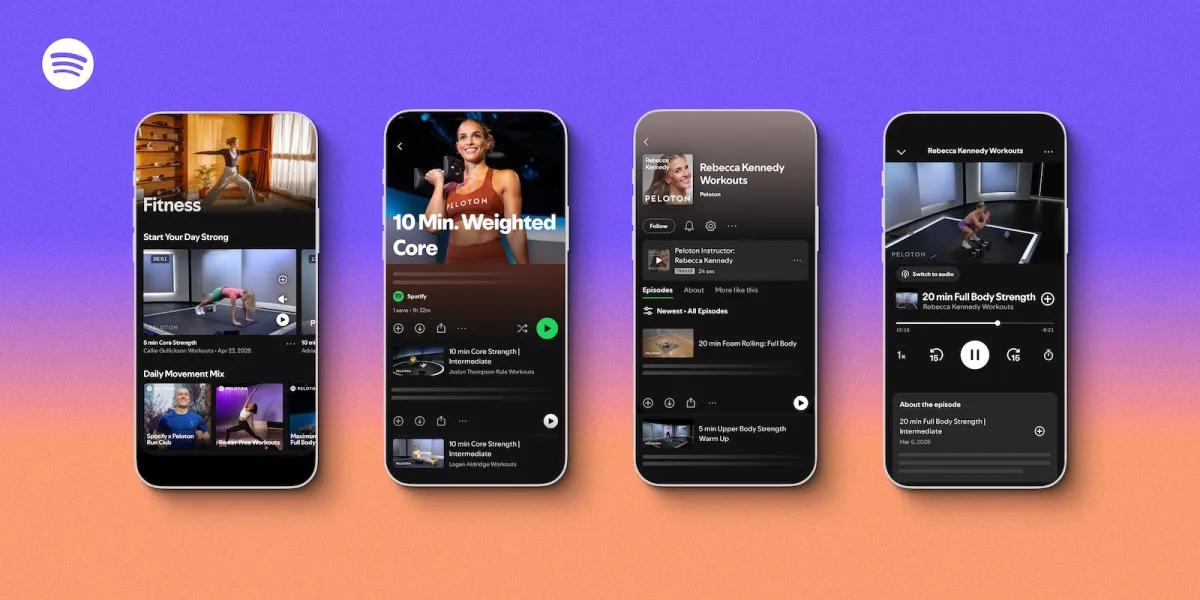
Spotify has just taken a big step that many people did not expect. The company is no longer just about music and podcasts. It is now moving into fitness, with workout videos, guided sessions, and even classes from Peloton.
At first, this sounds exciting. You can now listen to music and work out in the same app. But when you look closely, an important question comes up. Is this a smart move that will make Spotify stronger, or is it a mistake that could push users away?
Let’s break it down in very simple terms.
What Spotify Just Launched
Spotify has added a new section called a fitness hub inside its app. This section gives users access to workout content. You can find guided exercises, workout playlists, and video sessions from fitness creators.
Some of these workouts are free, while others are for Premium users. The biggest part of this launch is the partnership with Peloton. Through this, Spotify is offering over 1,400 workout classes. These include strength training, cardio, yoga, meditation, and more.
The idea is simple. Instead of opening different apps for music and fitness, you do everything in one place.
Why Spotify Entered Fitness
This move did not happen by accident. Spotify is following user behavior. The company has data showing that almost 70 percent of its Premium users work out every month. Also, there are over 150 million workout playlists already on the platform.
That tells a clear story. People are already using Spotify while they exercise. So the company is trying to go one step further. Instead of just being the background music, it wants to become the full workout experience.
This is also about keeping users inside the app for a longer time. The more time people spend on Spotify, the more money the company can make through subscriptions and other features.
The Smart Side of This Move
There is a strong reason why this could work very well.
First, Spotify already has a massive user base. Millions of people open the app every day. Adding fitness content to an app people already use makes adoption easier. Users do not need to download anything new.
Second, convenience is powerful. Many people do not like switching between apps. If you can play music, follow a workout, and track your routine in one place, it saves time and effort.
Third, this opens new income paths for Spotify. Fitness creators can now earn money through the platform. Spotify can also introduce paid fitness features in the future. This could turn the app into a full lifestyle platform, not just a music service.
In simple terms, Spotify is trying to become part of your daily life, not just your entertainment.
The Problem Nobody Is Talking About
Now here is where things get interesting.
Spotify is starting to feel crowded.
At the beginning, Spotify was simple. You opened it, played music, and that was it. Over time, it added podcasts, audiobooks, video content, and now fitness. While this sounds like growth, it also creates a problem.
Too many features can confuse users.
When an app tries to do everything, it can lose its main purpose. Some users just want music. They may not care about workouts, videos, or other features. If the app becomes too complex, it can frustrate these users.
There is also the issue of focus. Companies that try to do too many things at once sometimes struggle to do any of them very well. Fitness is a serious space with strong competitors like Apple Fitness and other dedicated apps. Spotify is entering a market where users expect high quality and consistency.
So the big question is this. Can Spotify balance everything without losing what made it popular in the first place?
Can Spotify Compete in the Fitness Industry
The fitness space is not new. Many apps already offer guided workouts, tracking tools, and personal plans. These apps are built only for fitness, so they have deeper features.
Spotify is different. It is not building its own fitness system from scratch. Instead, it is partnering with creators and companies like Peloton. This means it is acting more like a platform than a full fitness service.
This approach can work, but it also has limits. If users want detailed fitness tracking, meal plans, or personal coaching, they may still go to dedicated apps.
Spotify’s strength is content, not coaching. That is an important difference.
What This Means for Users
For regular users, this change can go in two ways.
If you already use Spotify for workouts, this is a big win. You now get guided sessions and structured workouts without leaving the app. It makes things easier and more organized.
But if you only use Spotify for music, this might feel like too much. The app could start to feel heavy or cluttered. Some users may even prefer simpler alternatives if they feel overwhelmed.
In the end, it depends on what you want from the app.
The Bigger Strategy Behind This Move
This is not just about fitness. It is part of a bigger plan.
Spotify is trying to become an all-in-one platform for audio, video, and lifestyle content. It wants to compete not just with music apps, but with platforms that control more of your daily habits.
Think about it like this. The more things you do on one app, the harder it is to leave that app. That is exactly what Spotify is aiming for.
Fitness is just one step in that direction.
Also Read:
Instagram Instants Is Here, But There’s One Big Problem Nobody Is Talking About
The Bottom Line
Spotify’s move into fitness is bold, and it makes sense when you look at user behavior. People already use the app while working out, so adding full workout content feels like a natural step.
But there is a real risk here. As Spotify adds more features, it could lose the simplicity that made it successful. Not every user wants an all-in-one app. Some just want a clean, simple music experience.
So, is this a smart move or a big mistake?
The truth is, it is both.
If Spotify can keep things simple while adding value, this could be one of its best decisions. But if the app becomes too crowded and confusing, it could push users away.
The next few months will show which path Spotify takes.
